Rift Between KMT and U.S.
China Times Editorial, April 20, 2026
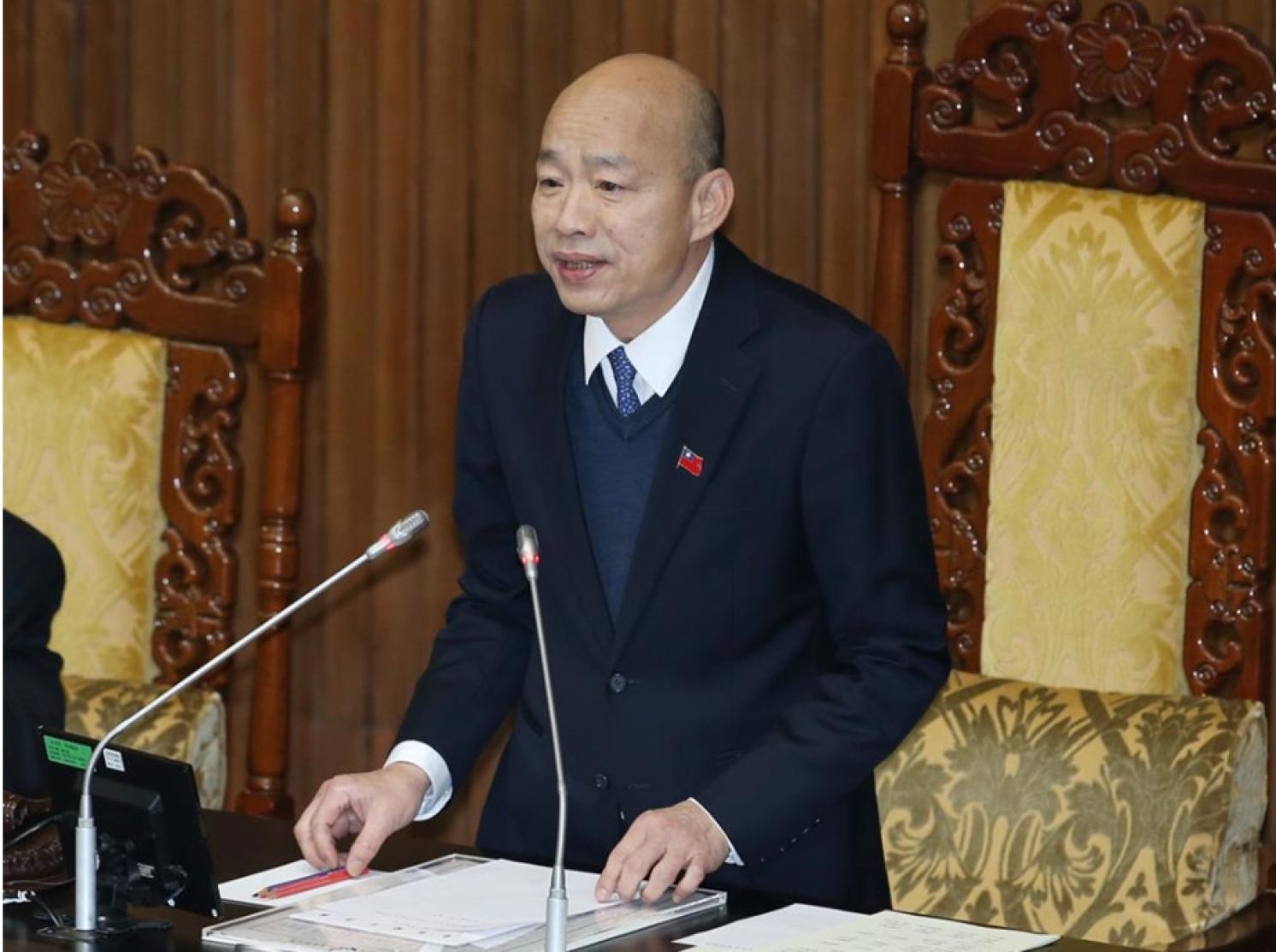
The Kuomintang’s (KMT) recent handling of the proposed “Special Act for Defense Procurement” has sparked major internal controversy. KMT Vice Chairman Chi Lin-lien declared at the Central Standing Committee that he would put righteousness above personal ties and expel Speaker Han Kuo-yu of the Legislative Yuan from the party. The divide between pro-American and American-skeptic factions within the party has intensified. At its core, the reason lies in the fact that since the KMT became an opposition party, its distance from the United States has grown ever wider. The resulting mistrust and lack of understanding have led to the current deadlock. The scale of the contradiction is likely something even the United States, which has been actively lobbying recently, did not anticipate.
The signals released by the United States are clear: based on U.S. President Donald Trump’s expectation that allies increase defense spending, Washington hopes Taiwan will demonstrate its determination for self-defense. As the largest party in the Legislative Yuan, the KMT’s role is highly valued by the United States, which has actively lobbied key KMT figures. It has also implied that if the special defense budget is handled appropriately, cooperation between the United States and the KMT will be within reach.
These signals from the United States have been understood by the pro-American and American-savvy factions within the KMT, prompting them to actively call for raising the budget ceiling. However, resistance from the party’s conservative, American-skeptic faction remains substantial. The main reason may not be directly related to mainland China, but rather stems from the KMT’s accumulated distrust of the United States over the years it has spent in opposition, allowing American-skeptic camp to flourish.
Due to the close cooperation between the United States and administration of former President Tsai Ing-wen, many within the KMT suspect that the United States intervened in multiple elections to help the Democratic Progressive Party (DPP) defeat the KMT. This has further led them to question American intentions in both military security and economic trade. Claims include that the United States only sells inferior goods and fails to deliver even after payment; that it bullies Taiwan’s industries in trade, relocates the Taiwan Semiconductor Manufacturing Company (TSMC), and dumps agricultural products to harm farmers. The conservative faction within the party firmly believes in the American-skeptic narrative. Allegations that the DPP may engage in corruption are merely surface-level justifications. The deeper reason is a complete lack of trust in whether the United States would stand with the KMT.
From the American perspective, Taiwan should demonstrate its defense commitment through the special defense act, with the ceiling reflecting the level of determination. However, in the eyes of the KMT’s skeptical faction, this is essentially a demand for protection money. Although they will not openly confront the United States, the so-called “NT$380 billion + N” approach implies viewing the United States as a thug demanding protection fees—if it does not explicitly ask, then nothing will be given. The two sides operate on entirely different logics. The United States finds it difficult to understand why the KMT is so hardline, while the KMT cannot understand why the United States still refuses to accept its stance. It is as if they are talking past each other.
It can only be said that over the past decade, the two sides have gradually drifted apart. Now, attempting to return to the table and discuss matters together, the short time available is far from sufficient to rebuild mutual understanding.
From: https://www.chinatimes.com/opinion/20260429004161-262101?chdtv